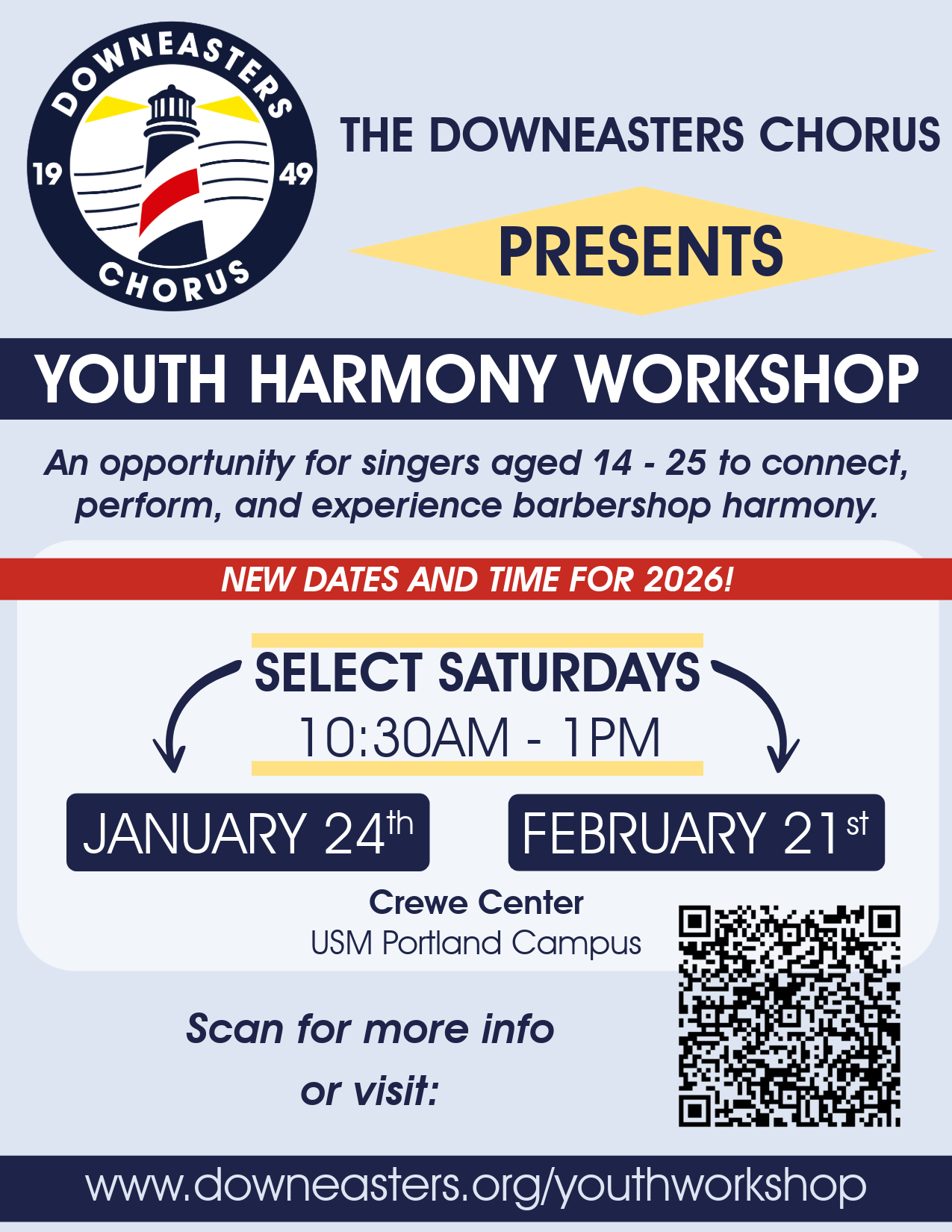
Calling all singers aged 14 – 25!
The Downeasters Chorus invites you to an exciting new opportunity to connect, perform, and experience the magic of barbershop harmony. Whether you’re a seasoned vocalist or just love to sing, this free workshop is designed to help you find your voice in harmony with others.
Led by Jonas Rimkunas, Voice Instructor at the University of Southern Maine and the Downeasters Chorus Vocal Development Leader, each session will explore a cappella techniques, performance skills, and the uniquely powerful sound of barbershop.
Sessions will be held on select Saturdays at the brand new Crewe Center on USM's Portland Campus:
📅 Jan 24, 2026 | Feb 21, 2026
🕐 10:30 AM – 1:00 PM
Please notes these new dates and times for the 2026 sessions!
Participants may also get the chance to learn from and sing alongside Constellation, one of Maine’s most exciting new barbershop quartets!
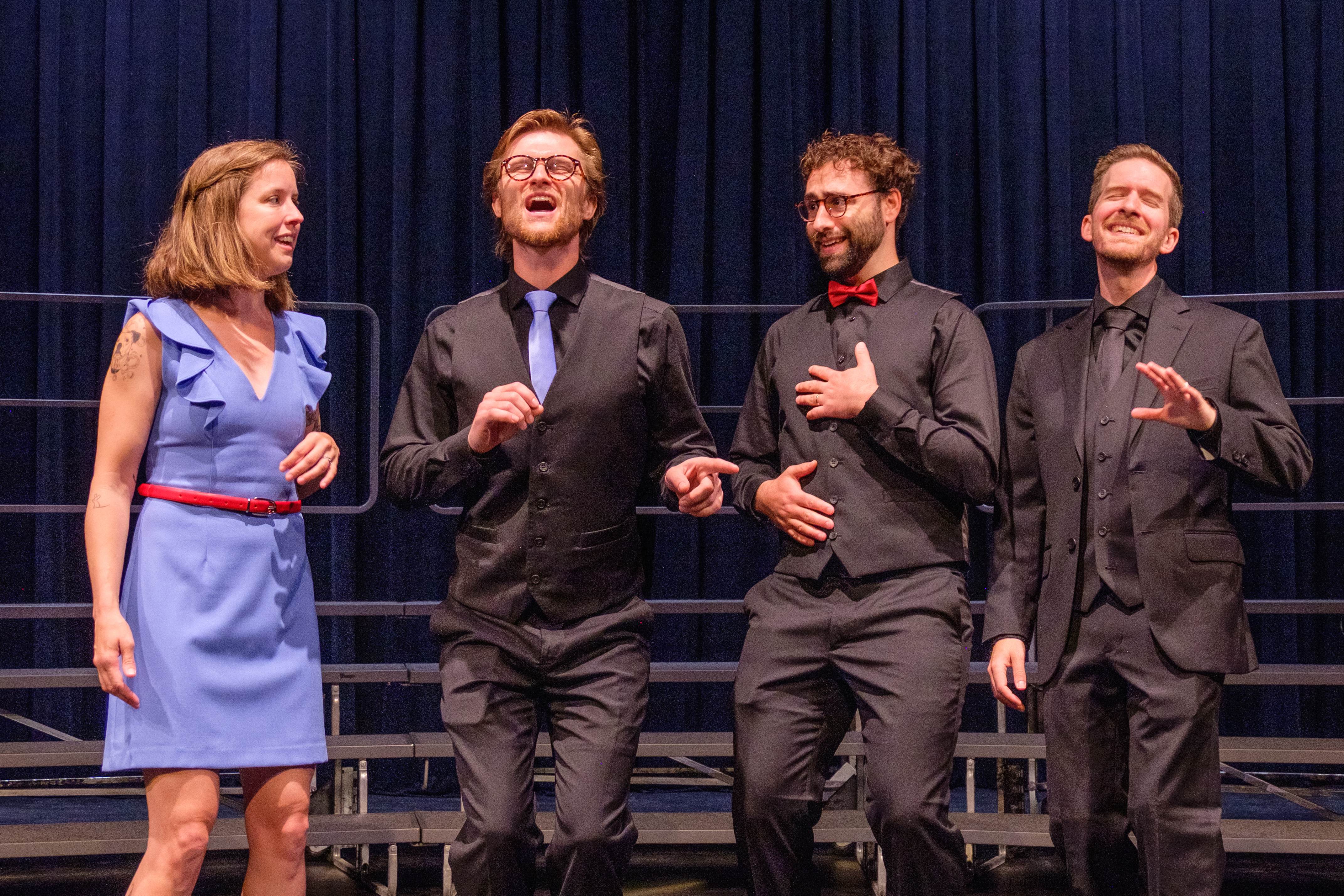
Come make music, meet new friends, and experience four-part barbershop harmony.
Songs for this cycle will include:
- Sittin' On Top Of The World
- Somewhere Over The Rainbow
- I'm Still Standin'
Interested? Sign up HERE
FAQ Section
You can also email harmonyworkshop@downeasters.org with any questions.What is barbershop? (from https://www.barbershop.org/music/about-our-music)
Barbershop is considered a style of arranging and singing in close, four part, a cappella harmony; it is not an era, style of music, or genre. The melody is usually in the second voice with harmony above and below. The arranger harmonizes every melody note with few passing tones or doubles, and creates more harmonic movement by adding secondary dominant chord progressions. The baritone part functions in a unique way, filling in the missing note of each chord.
What part should I sing?
Good question! Barbershop voice parts are a little bit different from what you might expect from a regular SATB choir. The four voice parts in barbershop singing are Tenor, Lead, Baritone, and Bass.
- Tenor - Highest voice part, harmonies sung above the other parts with occasional voice crossing. Treble (Soprano or alto) voices with good headvoice. Tenor or bass voices with very high falsetto.
- Lead - Inner voice part, and most often the melody of the song. Soprano or alto voices with good chest voice. High Tenor voices with access to falsetto, mix and chest voice.
- Baritone - Inner harmony part, similar range to lead but fills in all the chords. This part is often the most challenging to sing in terms of notes. Contralto, tenor or baritone voices with good range and good musical skills.
- Bass - Lowest harmony part. This part provides the foundation for most chords, and should be sung by singers with a good low range. Lowest voices. Basses or low baritones in SATB choirs.